English
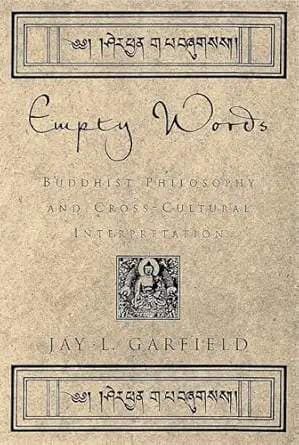
Empty Words: Buddhist Philosophy and Cross-Cultural Interpretation
Jay L. Garfield
English
Book
Oxford University Press, New York; Oxford.
2002
321 pages
4.8 MB
Introduction
The book is organized into three major parts: Madhyamaka, Yogācāra, and Ethics and Hermeneutics. In the preface, Garfield explains that the essays were written over a decade and are intended to clarify connections between Madhyamaka and Yogācāra, Buddhist metaphysics and Buddhist ethics, philosophy and interpretation, and the ethics and politics of scholarship. He also states that his approach is better understood as cross-cultural philosophy rather than simply comparative philosophy.
Part I: Madhyamaka
Chapter 1: “Epoche and Śūnyatā: Skepticism East and West”
This chapter compares Madhyamaka with Western skepticism, especially Sextus Empiricus, Hume, and Wittgenstein. Garfield argues that skepticism should not be understood as nihilism. Rather, it is a therapeutic philosophical method that cures attachment to extreme metaphysical positions. Madhyamaka functions similarly: it rejects both reification and nihilism and directs attention to the conventional functioning of language, persons, causality, and moral practice.
Chapter 2: “Dependent Arising and the Emptiness of Emptiness: Why Did Nāgārjuna Start with Causation?”
This chapter examines why Nāgārjuna begins his philosophical analysis with causation. Garfield presents dependent arising and emptiness as inseparable: things are empty because they arise dependently, and they arise dependently because they are empty of intrinsic nature. The chapter highlights the philosophical centrality of causality in Madhyamaka.
Chapter 3: “Emptiness and Positionlessness: Do the Madhyamika Relinquish All Views?”
This chapter discusses whether Madhyamaka itself holds a philosophical position. Garfield argues that Madhyamaka does not advance a new metaphysical thesis to replace older ones. Its method is to expose the incoherence of intrinsic existence and to free philosophical inquiry from fixation on ultimate foundations.
Chapter 4: “Nāgārjuna’s Theory of Causality: Implications Sacred and Profane”
Here Garfield analyzes Nāgārjuna’s treatment of causality in relation to both Buddhist soteriology and ordinary explanation. He argues that Nāgārjuna does not deny causality at the conventional level. What is denied is a metaphysical causal power existing independently of relational conditions.
Chapter 5: “Nāgārjuna and the Limits of Thought”
Written with Graham Priest, this chapter explores the limits of thought, logic, and conceptual analysis. It brings Nāgārjuna into conversation with contemporary philosophical logic and examines how Madhyamaka handles paradox, contradiction, negation, and the limits of discursive reasoning.
Part II: Yogācāra
Chapter 6: “Three Natures and Three Naturelessnesses: Comments Concerning Cittamātra Conceptual Categories”
This chapter explains the Yogācāra doctrines of the three natures and the three naturelessnesses. Garfield analyzes how Cittamātra understands experience, conceptual construction, dependence, and ultimate reality. The chapter clarifies that Yogācāra is not a simple denial of the world but a sophisticated account of cognition and appearance.
Chapter 7: “Vasubandhu’s Treatise on the Three Natures: A Translation and Commentary”
This chapter provides a translation and commentary on Vasubandhu’s Trisvabhāvanirdeśa. Garfield explains the three natures: the imagined nature, the dependent nature, and the perfected nature. The chapter is both textual and philosophical, showing how Yogācāra analyzes the structure of illusion and the possibility of insight.
Chapter 8: “Western Idealism through Indian Eyes: A Cittamātra Reading of Berkeley, Kant, and Schopenhauer”
This chapter places Yogācāra in dialogue with Western idealism. Garfield compares Vasubandhu’s Cittamātra with Berkeley, Kant, and Schopenhauer, while also warning against reducing Yogācāra to any single Western model. The chapter demonstrates the book’s cross-cultural method in practice.
Chapter 9: “Sounds of Silence: Ineffability and the Limits of Language in Madhyamaka and Yogācāra”
This chapter compares how Madhyamaka and Yogācāra treat language, silence, and ineffability. Garfield examines the limits of philosophical discourse and the different ways these Buddhist traditions speak about what cannot be fully captured by conceptual language.
Part III: Ethics and Hermeneutics
Chapter 10: “Human Rights and Compassion: Toward a Unified Moral Framework”
This chapter brings Buddhist compassion into dialogue with modern human rights discourse. Garfield seeks a moral framework that can integrate concern for individual dignity with Buddhist ideas of interdependence, compassion, and moral responsibility.
Chapter 11: “Buddhism and Democracy”
This chapter examines whether Buddhist philosophical ideas can support democratic values. Garfield considers themes such as compassion, interdependence, non-self, responsibility, and community in relation to democratic political thought.
Chapter 12: “The ‘Satya’ in Satyagraha: Samdhong Rinpoche’s Approach to Nonviolence”
This chapter discusses truth and nonviolence through Samdhong Rinpoche’s interpretation of satyagraha. Garfield explores the ethical and political significance of nonviolent action from a Buddhist philosophical perspective.
Chapter 13: “Temporality and Alterity—Dimensions of Hermeneutic Distance”
This chapter addresses interpretation across time, culture, and philosophical tradition. Garfield reflects on how readers approach texts that are historically and culturally distant, and how such distance shapes understanding.
Chapter 14: “Philosophy, Religion, and the Hermeneutic Imperative”
The final chapter examines the relation between philosophy and religion, especially in the context of Buddhist thought. Garfield argues against dismissing Buddhist philosophy as “just religion” and emphasizes the need for responsible hermeneutic engagement with non-Western philosophical traditions.
Copyright Notice
This material is provided solely for academic research, study, and religious practice purposes under Article 25 of Vietnam's Intellectual Property Law. Reproduction, distribution, or commercial use is strictly prohibited.
If you are the author, translator, publisher, or rights holder and believe this content has been posted without proper authorization, please contact us and we will promptly review and remove or restrict access.
Documents
Empty Words: Buddhist Philosophy and Cross-Cultural Interpretation
4.8 MB
Keywords
Empty WordsJay L. GarfieldMadhyamakaYogācāraCross-Cultural Philosophy.
Sách cùng tác giả
Sách đọc nhiều nhất
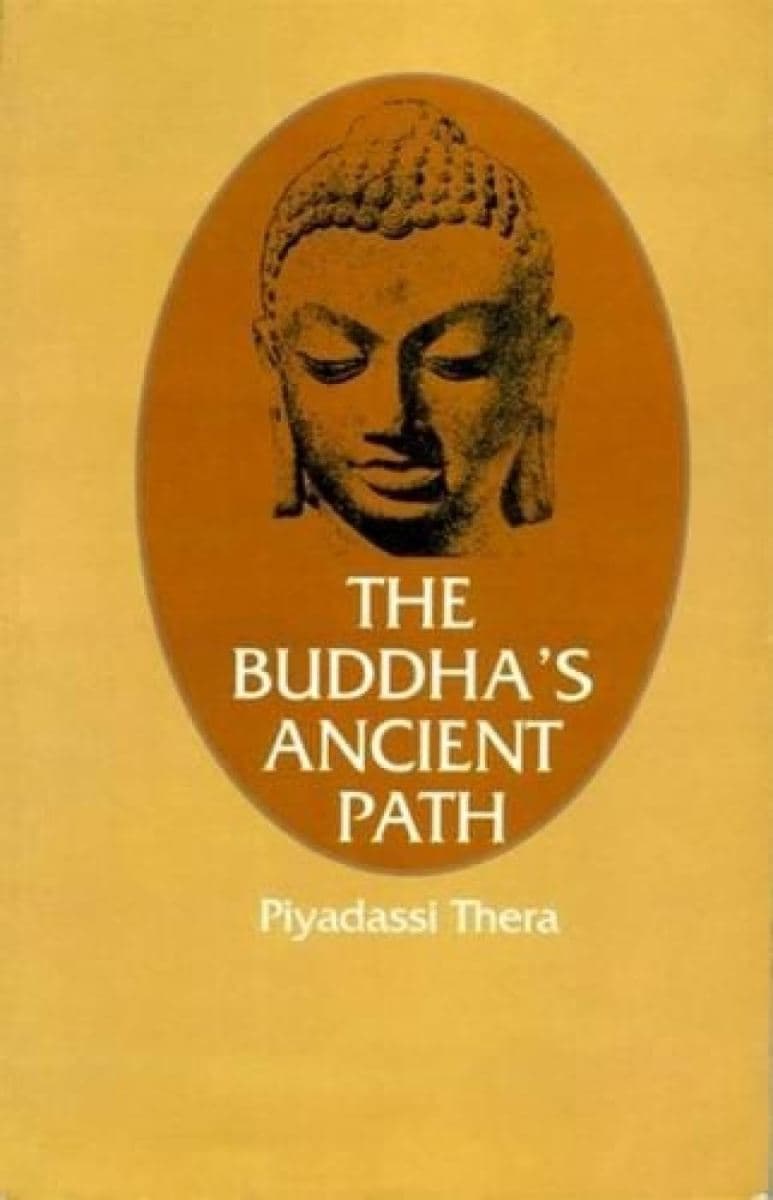
The Buddha’s Ancient Path
Piyadassi Thera
Book·10.7 MB
229 pages1979223
The Questions of King Milinda, Part II
F. Max Müller (Editor)
Book·20.8 MB
427 pages1894208

A Taste of Freedom
Venerable Ajahn Chah / Phra Bodhinyana Thera
Book·1.2 MB
104 pages1980207
Buddhist Meditation: An Anthology of Texts from the Pāli Canon
Sarah Shaw (General Editors: Charles S. Prebish and Damien Keown)
Book·17.5 MB
253 pages2006204