English
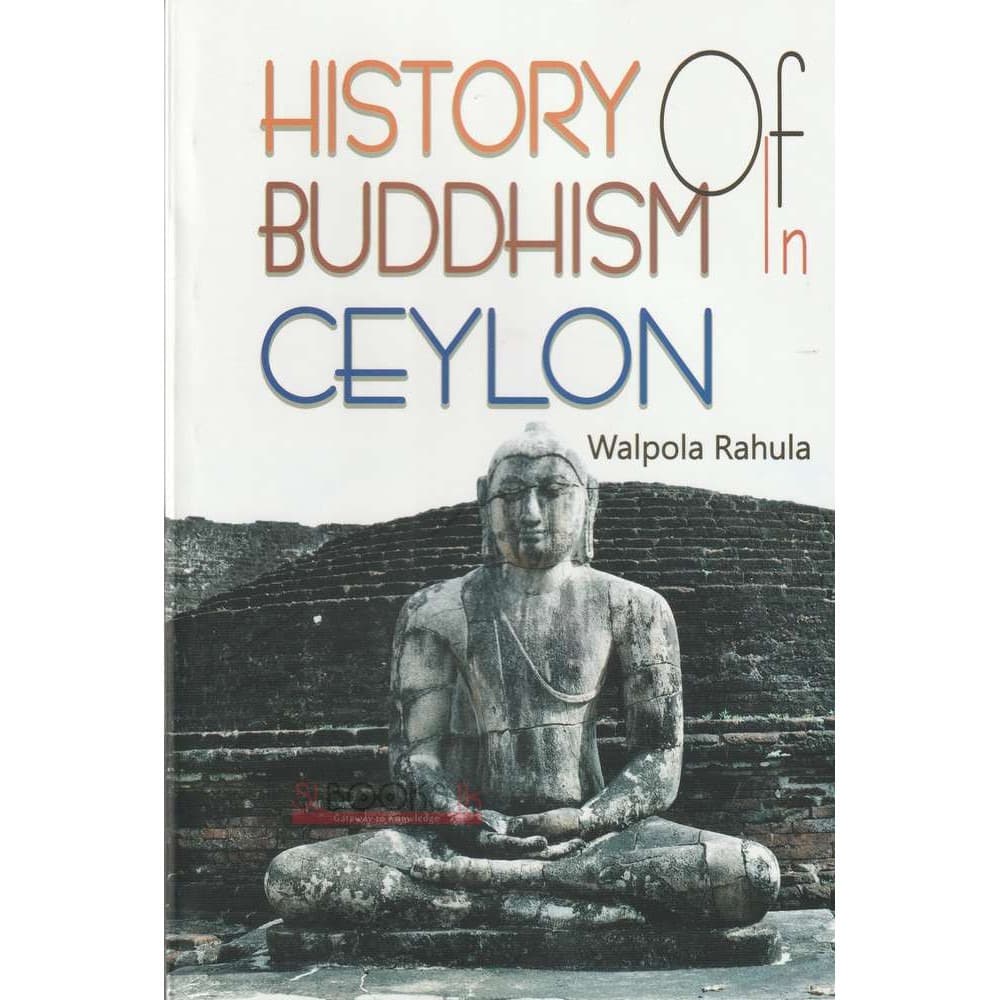
History of Buddhism in Ceylon
Walpola Rahula
English
Book
The Buddhist Cultural Centre; Nedimala, Dehiwala, Sri Lanka.
1956
317 pages
68.2 MB
Introduction
The book is organized into seventeen chapters, supported by appendices, chronology, list of kings, bibliography, index, maps, and illustrations. The opening chapters establish the Indian background, pre-Buddhist Ceylonese social and religious conditions, and the coming of Buddhism to the island. The next sections explain how Buddhism became closely connected with the state, followed by two chapters on its development through different historical phases. The central chapters analyze the monastery in depth: its structure, administration, institutional evolution, routine activities, and ascetic ideals. The later chapters turn to the broader Buddhist world of ancient Ceylon, including arahants, lay social life, lay religious life, ceremonies, festivals, and education. The illustrations and maps further reinforce the historical setting, including ancient Anuradhapura, Buddhist monuments, Bodhi-tree sites, cave remains, thūpas, vihāras, and archaeological remains. Overall, the work presents the Anuradhapura period as the formative era in which Buddhism became the organizing spiritual, cultural, political, and educational framework of Ceylonese civilization.
Copyright Notice
This material is provided solely for academic research, study, and religious practice purposes under Article 25 of Vietnam's Intellectual Property Law. Reproduction, distribution, or commercial use is strictly prohibited.
If you are the author, translator, publisher, or rights holder and believe this content has been posted without proper authorization, please contact us and we will promptly review and remove or restrict access.
Documents
History of Buddhism in Ceylon
68.2 MB
Keywords
Buddhism in CeylonAnuradhapura PeriodWalpola RahulaMahindaBuddhist MonasticismSri Lankan BuddhismBuddhist Civilization.
Sách cùng tác giả
Sách đọc nhiều nhất
The Buddha’s Ancient Path
Piyadassi Thera
Book·10.7 MB
229 pages1979223
The Questions of King Milinda, Part II
F. Max Müller (Editor)
Book·20.8 MB
427 pages1894208

A Taste of Freedom
Venerable Ajahn Chah / Phra Bodhinyana Thera
Book·1.2 MB
104 pages1980207
Buddhist Meditation: An Anthology of Texts from the Pāli Canon
Sarah Shaw (General Editors: Charles S. Prebish and Damien Keown)
Book·17.5 MB
253 pages2006204