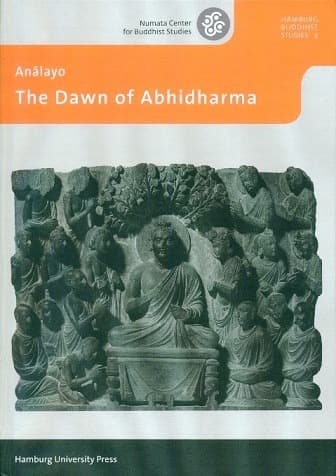
The Dawn of Abhidharma
Introduction
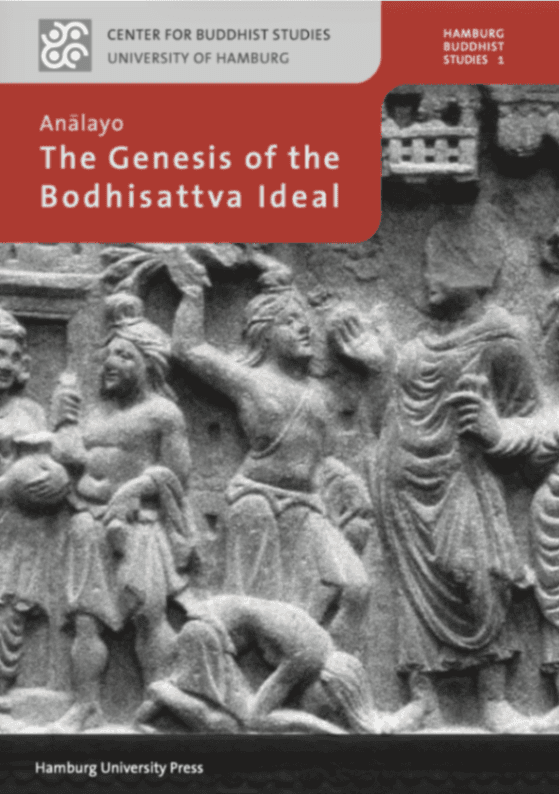
Bhikkhu Anālayo presents this volume as a companion to his earlier study, The Genesis of the Bodhisattva Ideal. Whereas that work examined the emergence of the bodhisattva ideal, The Dawn of Abhidharma investigates another development that profoundly shaped the history of Buddhist thought: the emergence of Abhidharma. The author explicitly limits his inquiry to selected early discourses rather than attempting an exhaustive history of Abhidharma literature.
The book adopts a comparative textual methodology. Its principal evidence comes from the four Pāli Nikāyas and parallel versions of early discourses preserved in other Buddhist textual traditions. This comparative approach enables Anālayo to distinguish between features inherited from the common early Buddhist heritage and later developments that became associated with particular schools.
The work is organized into four major thematic stages: the role of oral recitation and doctrinal lists; the relationship between wisdom and early canonical Abhidharma; meditative analysis and omniscience; and the relationship between awakening, doctrinal development, and the authentication of the Abhidharma.
A central argument of the book concerns the conventional explanation that Abhidharma arose through the use of doctrinal lists (mātṛkā) and question-and-answer formats. Anālayo argues that these formal devices were widespread features of oral transmission and were not, by themselves, uniquely characteristic of Abhidharma. Instead, the distinctive development of Abhidharma lies in a shift toward increasingly comprehensive analysis: Buddhist teachings were reorganized, expanded, correlated, and examined in greater detail, eventually generating new terminology and conceptual structures.
Across four chapters, the study explores communal recitation and doctrinal lists, wisdom and early canonical Abhidharma, meditative analysis and the Buddha’s omniscience, and finally awakening and the authentication of Abhidharma literature. Particular attention is given to texts such as the Saṅgīti-sūtra, Bahudhātuka-sūtra, Anupada-sutta, Mahāsatipaṭṭhāna-sutta, and Mahācattārīsaka-sutta. The resulting picture presents Abhidharma not simply as scholastic classification, but as an evolving intellectual project aimed at producing an increasingly complete map of Buddhist doctrine and the path to awakening.
Copyright Notice
This material is provided solely for academic research, study, and religious practice purposes under Article 25 of Vietnam's Intellectual Property Law. Reproduction, distribution, or commercial use is strictly prohibited.
If you are the author, translator, publisher, or rights holder and believe this content has been posted without proper authorization, please contact us and we will promptly review and remove or restrict access.
Documents
The Dawn of Abhidharma
2.7 MB
Keywords
Sách cùng tác giả
Sách đọc nhiều nhất
The Buddha’s Ancient Path
Piyadassi Thera
The Questions of King Milinda, Part II
F. Max Müller (Editor)

A Taste of Freedom
Venerable Ajahn Chah / Phra Bodhinyana Thera
Buddhist Meditation: An Anthology of Texts from the Pāli Canon
Sarah Shaw (General Editors: Charles S. Prebish and Damien Keown)