
English
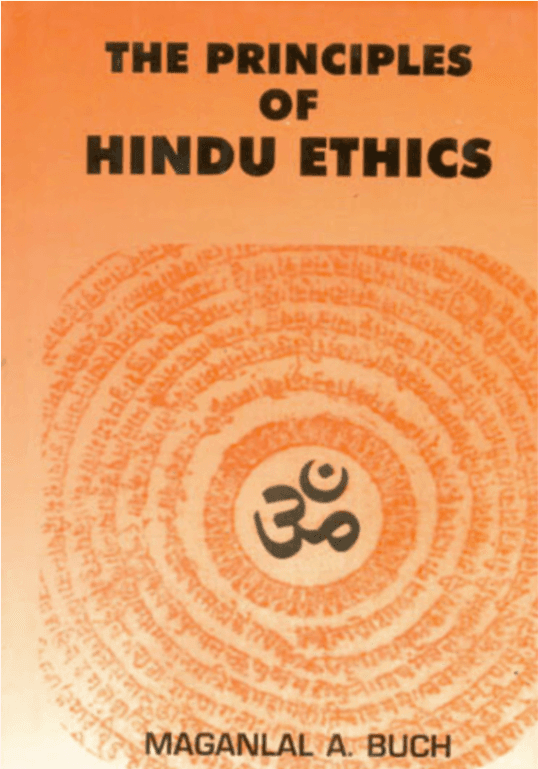
The Principles of Hindu Ethics
Maganlal A. Buch, M.A.
English
Book
Printed by Arya Sudharak Printing Press
1921
652 pages
35.9 MB
Introduction
The book begins by defining the Hindu view of life and the criteria by which moral action is judged. It considers the role of ṛta, śāstra, custom, public authority, exemplary conduct, happiness, social welfare, and mokṣa in determining ethical value. The author argues that Hindu ethics cannot be reduced to a single rule or theory, because it integrates practical consequences, social duties, spiritual discipline, and the ultimate realization of the Self.
The subsequent discussion moves from individual virtues to broader social institutions. It treats truth, purity, education, gender, marriage, family, property, kingship, punishment, caste, friendship, hospitality, charity, non-violence, compassion, renunciation, and the tension between karma and free will. The final sections connect ethics with theology and metaphysics by examining the unity of the divine, personal and impersonal conceptions of God, the paths of yoga, bhakti, karma, and jñāna, as well as faith, atonement, grace, and liberation.
Copyright Notice
This material is provided solely for academic research, study, and religious practice purposes under Article 25 of Vietnam's Intellectual Property Law. Reproduction, distribution, or commercial use is strictly prohibited.
If you are the author, translator, publisher, or rights holder and believe this content has been posted without proper authorization, please contact us and we will promptly review and remove or restrict access.
Documents
The Principles of Hindu Ethics
35.9 MB
Keywords
Hindu ethicsdharmakarmaahiṃsāmokṣasocial moralityBhagavad Gītā.
Sách cùng tác giả

Sách đọc nhiều nhất
The Buddha’s Ancient Path
Piyadassi Thera
Book·10.7 MB
229 pages1979223
The Questions of King Milinda, Part II
F. Max Müller (Editor)
Book·20.8 MB
427 pages1894208

A Taste of Freedom
Venerable Ajahn Chah / Phra Bodhinyana Thera
Book·1.2 MB
104 pages1980207
Buddhist Meditation: An Anthology of Texts from the Pāli Canon
Sarah Shaw (General Editors: Charles S. Prebish and Damien Keown)
Book·17.5 MB
253 pages2006204