
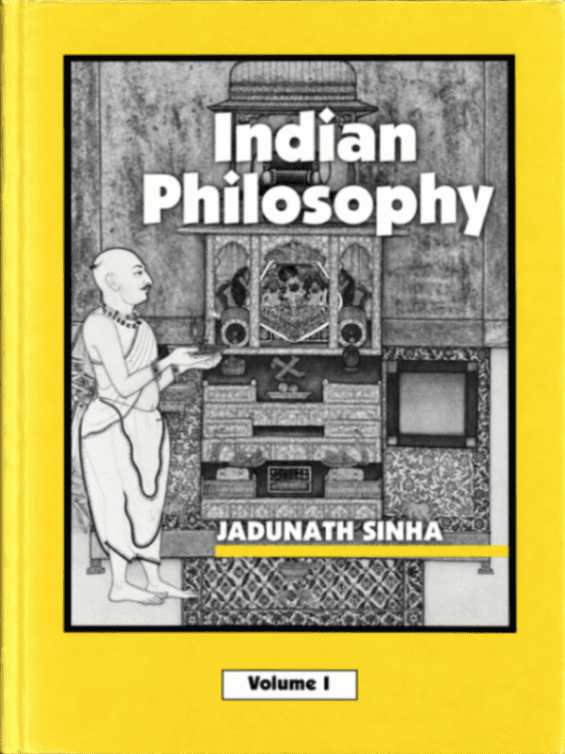
Indian Philosophy, Volume 1
Introduction
The opening chapter, “The Philosophy of the Upaniṣads,” traces the movement from Vedic polytheism, henotheism, and monotheism toward philosophical monism and idealism. Sinha analyzes the distinction between Para Brahman and Apara Brahman, the concepts of nirguṇa and saguṇa Brahman, the relation of the individual self (jīvātman) to the Supreme Self, bondage through avidyā, liberation through vidyā, and the Upaniṣadic accounts of cosmology, rebirth, immortality, worship, asceticism, yoga, devotion, and divine grace. He also identifies in the Upaniṣads the conceptual “germs” of later systems such as Advaita, Viśiṣṭādvaita, Sāṃkhya, Yoga, Nyāya, Vaiśeṣika, Mīmāṃsā, Buddhism, Jainism, and Cārvāka.
Chapter II, “The Cults in the Minor Upaniṣads,” examines later sectarian developments in Śaivism, Śāktism, Vaiṣṇavism, and the worship of Gaṇeśa, Sūrya, and Rāma. These texts are presented as combining Upaniṣadic metaphysics with increasingly explicit devotional, theistic, yogic, and Tantric elements. The chapter discusses the philosophical basis of Śaiva and Śākta theology, māyā, śakti, devotion, renunciation, yoga, monism, and ascetic morality.
Chapter III, “The Philosophy of the Epics,” turns to the Manusmṛti, the Mahābhārata, and the Rāmāyaṇa. The uploaded portion includes a substantial analysis of Manu’s cosmology, ethics, dharma, karma, rebirth, social duties, self-control, asceticism, and the four aims of human life. Sinha then begins his discussion of the Mahābhārata, where he examines Brahman, prakṛti, puruṣa, divine governance, human freedom, destiny, moral action, and the interaction between Sāṃkhya, Vedānta, and theistic ideas.
Table of Contents:
The Philosophy of the Upaniṣads
The Cults of the Minor Upaniṣads
The Philosophy of the Epics
The Philosophy of the Purāṇas: Viṣṇuism, Śaivism and Śāktism
The Philosophy of the Gītās: The Ways to the Goal
The Common Ideas in Indian Philosophy
The Philosophy of the Cārvāka
The Vaiśeṣika Philosophy
The Nyāya Philosophy
The Navya-Nyāya Philosophy
The Mīmāṃsā Philosophy
The Śabda Philosophy
Copyright Notice
This material is provided solely for academic research, study, and religious practice purposes under Article 25 of Vietnam's Intellectual Property Law. Reproduction, distribution, or commercial use is strictly prohibited.
If you are the author, translator, publisher, or rights holder and believe this content has been posted without proper authorization, please contact us and we will promptly review and remove or restrict access.
Documents
Indian Philosophy, Volume 1
387.2 MB
Series: Indian Philosophy
Select a volume to see details or navigate between parts.
Keywords
Sách cùng tác giả
Sách đọc nhiều nhất
The Buddha’s Ancient Path
Piyadassi Thera
The Questions of King Milinda, Part II
F. Max Müller (Editor)

A Taste of Freedom
Venerable Ajahn Chah / Phra Bodhinyana Thera
Buddhist Meditation: An Anthology of Texts from the Pāli Canon
Sarah Shaw (General Editors: Charles S. Prebish and Damien Keown)