
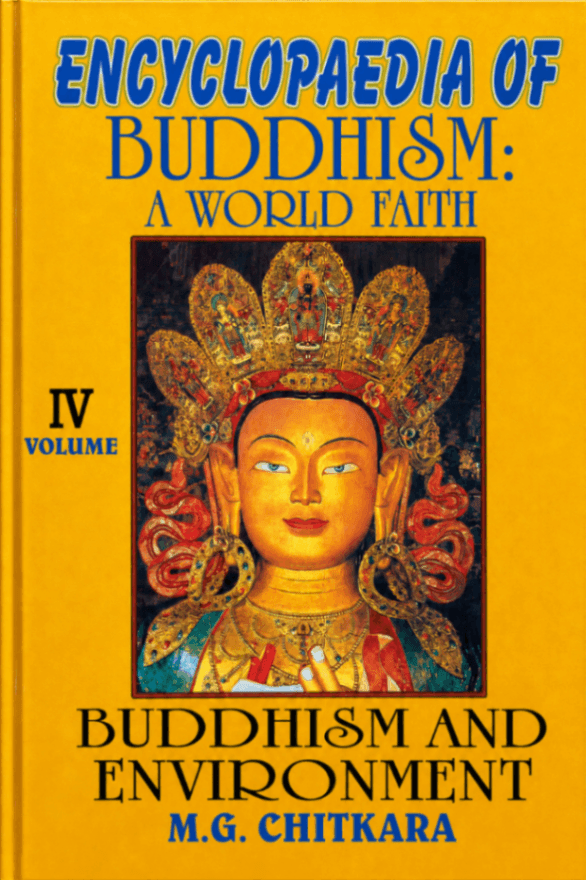
Encyclopaedia of Buddhism: A World Faith, Volume 4: Buddhism and Environment
Introduction
This volume presents a wide-ranging study of the relationship between Buddhism and environmental responsibility. Its chapters address the Buddhist understanding of nature, ecological equilibrium, trusteeship, the protection of forests and wildlife, human rights, population and poverty, pollution, consumerism, ecotourism, sustainable development, water resources, environmental education, and the interdependence of all life. Drawing upon Buddhist ethics, Indian philosophical traditions and contemporary environmental discourse, M. G. Chitkara argues that ecological sustainability depends upon both institutional action and the cultivation of compassion, moderation, contentment and individual responsibility. The appendices further extend the discussion through reflections on the Wheel of Life, the noosphere, environmental responsibility and ecological prayer.
Table of Contents
Foreword
Preface
Appreciation
Introduction
Buddhist Concept of Environment
Earth: A Common Heritage
Trusteeship Is Humanism Par Excellence
Trusteeship Heritage
Dalit, the Oppressed and Earth
Ecosystem in Its Equilibrium
Eco-Friendly System
Harmony with Nature
Nature and Nomadic Life
Equilibrium in Nature
Nature Our Mother
Safety Valve to Impending Ecocide
Concept in Legends and Folklore
Wildlife Conservation
Concept of Bodhi Tree and Forestation
Be Natural
Man, Environment and Global Concerns
Human Rights and Environment
Environment, Human Rights and Tibet
Reincarnation Theory
Desire: The Seed of Mind
Population, Poverty and Environment
Cold War Legacy
Environmental Catastrophe
Dilution: No Solution to Pollution
Panchsheel and Environment
Consumerism: Lead to Environmental Degradation
Eco-Tourism Is Eco-Development
Sustainable Development
Vision for Sustainable Water Future
Contentment, Not Consumerism
Vasudhaiva Kutumbakam and Environment
Interdependence: Fundamental Law of Nature
Bring Child Face to Face with His Divinity
Environmental Education: Some Reflections
Loving Life and Fearing Death
Excel Excellence with Indian Ethos
Appraisal
Appendices
Appendix I: The Wheel of Life and the Noosphere
Appendix II: Environment
Appendix III: Prayer - Ecological Responsibility
Bibliography
Index
Copyright Notice
This material is provided solely for academic research, study, and religious practice purposes under Article 25 of Vietnam's Intellectual Property Law. Reproduction, distribution, or commercial use is strictly prohibited.
If you are the author, translator, publisher, or rights holder and believe this content has been posted without proper authorization, please contact us and we will promptly review and remove or restrict access.
Documents
Encyclopaedia of Buddhism: A World Faith, Volume 4: Buddhism and Environment
261.3 MB
Series: Encyclopaedia of Buddhism: A World Faith
Select a volume to see details or navigate between parts.
Encyclopaedia of Buddhism: A World Faith, Volume 4: Buddhism and Environment
Keywords
Sách đọc nhiều nhất
The Buddha’s Ancient Path
Piyadassi Thera
The Questions of King Milinda, Part II
F. Max Müller (Editor)

A Taste of Freedom
Venerable Ajahn Chah / Phra Bodhinyana Thera
Buddhist Meditation: An Anthology of Texts from the Pāli Canon
Sarah Shaw (General Editors: Charles S. Prebish and Damien Keown)