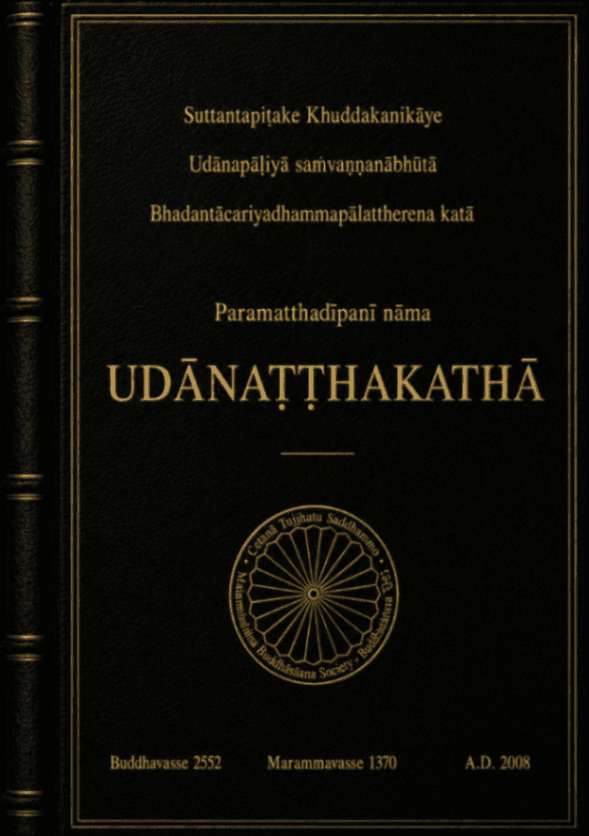
Paramatthadīpanī nāma Udānaṭṭhakathā
Pāli

Paramatthadīpanī nāma Udānaṭṭhakathā

Ācariya Dhammapāla
Pāli
Chú giải
Ministry of Religious Affairs, Yangon, Myanmar
2008
477 trang
3.3 MB

Giới thiệu

Ganthārambhakathā: Introduces the purpose of the commentary, defines the term Udāna, and explains the place of the text within the Sutta-piṭaka, Khuddaka-nikāya, and the ninefold division of the Buddha’s teaching. 1. Bodhivagga: Explains the early awakening-related discourses, including the three Bodhi-suttas, Huṃhuṅka, Brāhmaṇa, Mahākassapa, Ajakalāpaka, Saṅgāmaji, Jaṭila, and Bāhiya. Key themes include awakening, dependent arising, renunciation, direct knowledge, and liberation. 2. Mucalindavagga: Covers Mucalinda, Rāja, Daṇḍa, Sakkāra, Upāsaka, Gabbhinī, Ekaputtaka, Suppavāsā, Visākhā, and Bhaddiya. The section highlights protection, restraint, household devotion, suffering, generosity, and spiritual happiness. 3. Nandavagga: Discusses Kammavipākaja, Nanda, Yasoja, Sāriputta, Mahāmoggallāna, Pilindavaccha, Sakkudāna, Piṇḍapātika, Sippa, and Loka. Major concerns include kamma-result, monastic discipline, perception, and the nature of the world. 4. Meghiyavagga: Explains Meghiya, Uddhata, Gopālaka, Yakkhapahāra, Nāga, Piṇḍola, Sāriputta, Sundarī, Upasena, and Sāriputta-upasama. It emphasizes mental cultivation, seclusion, restraint, serenity, and the purification of conduct. 5. Soṇavagga: Includes Piyatara, Appāyuka, Suppabuddhakuṭṭhi, Kumāraka, Uposatha, Soṇa, Kaṅkhārevata, Saṅghabheda, Sadhāyamāna, and Cūḷapanthaka. The section treats devotion, shortness of life, faith, observance, schism, and meditative discipline. 6. Jaccandhavagga: Explains Āyusaṅkhārossajjana, Sattajaṭila, Paccavekkhaṇa, three Nānātitthiya-suttas, Subhūti, Gaṇikā, Upātidhāvanti, and Uppajjanti. Key themes include contemplation, sectarian views, blind attachment, and arising phenomena. 7. Cūḷavagga: Covers Lakuṇḍakabhaddiya-related discourses, Satta, Taṇhāsaṅkhaya, Papañcakhaya, Kaccāna, Udapāna, and Utena. The section focuses on craving’s destruction, the ending of proliferation, wisdom, and noble insight. 8. Pāṭaligāmiyavagga: Explains four Nibbāna-related suttas, Cunda, Pāṭaligāmiya, Dvidhāpatha, Visākhā, and two Dabba-suttas. This final chapter gives particular attention to nibbāna, final liberation, and the doctrinal culmination of the Udāna. Nigamanakathā: Concluding section closing the commentary.

Thông báo bản quyền

Tài liệu được cung cấp nhằm phục vụ mục đích nghiên cứu, học tập và tu học theo Điều 25, Luật Sở hữu trí tuệ Việt Nam. Nghiêm cấm sao chép, phân phối hoặc sử dụng vì mục đích thương mại.

Nếu quý tác giả, dịch giả, nhà xuất bản hoặc chủ sở hữu bản quyền cho rằng tài liệu này được lưu trữ chưa phù hợp, vui lòng liên hệ với chúng tôi. Chúng tôi sẽ kiểm tra và gỡ bỏ hoặc hạn chế truy cập trong thời gian sớm nhất.

Copyright Notice

This material is provided solely for academic research, study, and religious practice purposes under Article 25 of Vietnam's Intellectual Property Law. Reproduction, distribution, or commercial use is strictly prohibited. If you are the author, translator, publisher, or rights holder and believe this content has been posted without proper authorization, please contact us and we will promptly review and remove or restrict access.

Tài liệu

Paramatthadīpanī nāma Udānaṭṭhakathā

3.3 MB

Sách Cùng Bộ: Khuddaka-Nikāya Atthakatha (Pali)

Lựa chọn từng tập để xem thông tin chi tiết hoặc chuyển nhanh giữa các phần.

T.4
Tập 4

Paramatthadīpanī nāma Udānaṭṭhakathā

477 trang
Bộ sách có 28/28 tập đã xuất bản

Từ khóa

UdānaUdānaṭṭhakathāParamatthadīpanīKhuddaka-nikāyaDhammapālaNibbānaPāli commentary