Introduction
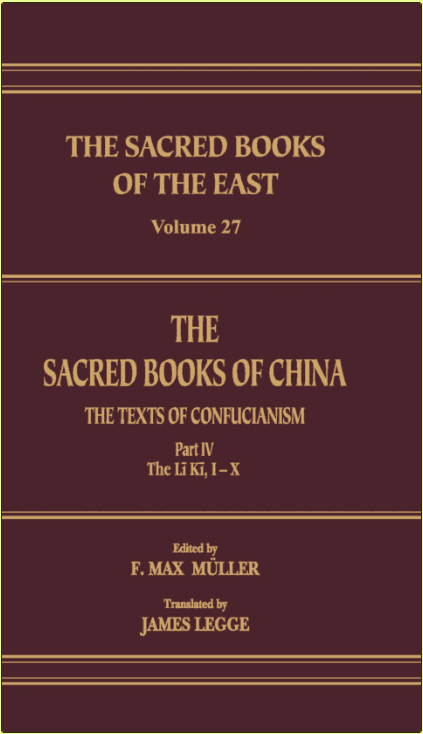
Preface: Explains Legge’s translation history, earlier partial translations, sources used, Chinese commentarial traditions, and the scholarly difficulty of translating the Lî Kî.
Introduction, Chapter I — Three different Lî King, or Ritual Books, acknowledged in China: Discusses the Î Lî, Kâu Lî, and Lî Kî, their recovery and formation under the Han dynasty, and the role of Han scholars in preserving ritual literature.
Introduction, Chapter II — Significance of the Chinese character called Lî: Explains lî as a term of religious, moral, social, and ceremonial significance; discusses the title Lî Kî and the value of the work.
Introduction, Chapter III — Brief Notices of the different Books which make up the Collection: Gives concise notices of the forty-six books of the Lî Kî, including their subjects, authorship traditions, textual problems, and ritual-philosophical themes.
Book I — Khü Lî, or Summary of the Rules of Propriety: Presents general principles of reverence, conduct, speech, family duty, hierarchy, etiquette, giving and receiving, mourning behaviour, and proper social deportment.
Book II — The Than Kung: Focuses mainly on mourning rites, funeral observances, death, grief, and ritual conduct, with accounts involving Confucius and his disciples.
Book III — The Royal Regulations: Describes royal and feudal institutions, offices, schools, sacrifices, care for the aged, and political-ritual order.
Book IV — Yüeh Ling, or Proceedings of Government in the Different Months: Arranges government, ritual, seasonal activity, sacrifice, agriculture, and court duties according to the twelve months.
Book V — The Questions of 3ang-3ze: Presents questions and answers on ritual difficulties, especially mourning, ceremonial propriety, and cases of ritual judgment.
Book VI — Wan Wang Shih-3ze, or King Wan as Son and Heir: Discusses the conduct of King Wan, King Wu, and the Duke of Kâu, with emphasis on education, heirship, filial duty, and royal training.
Book VII — The Lî Yun, or Ceremonial Usages; their Origin, Development, and Intention: Explores the origin, development, religious foundation, and social function of ceremonial usages.
Book VIII — The Lî Khî, or Rites in the Formation of Character: Explains how rites shape moral personality, reverence, sincerity, and the formation of the superior person.
Book IX — The Kiâo Theh Sang, or the Single Victim at the Border Sacrifices: Discusses sacrifice, simplicity, sincerity, border sacrifice, capping, marriage, and ritual order.
Book X — The Nei 3eh, or the Pattern of the Family: Presents domestic rules, family hierarchy, filial service, women’s roles, child-rearing, household order, and ritualized family conduct.