Introduction
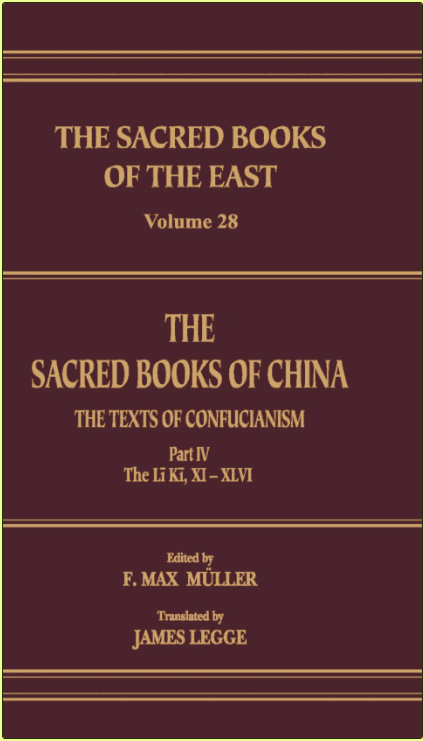
Book XI — Yü 3âo, or The Jade-bead Pendants of the Royal Cap: Describes royal caps, robes, court dress, ceremonial tablets, official deportment, meals, audiences, and ritual etiquette.
Book XII — Ming Thang Wei, or The Places in the Hall of Distinction: Presents the arrangement of ranks in the Hall of Distinction, the privileges of Lû, royal ritual objects, music, sacrifices, and ceremonial institutions.
Book XIII — Sang Fû Hsiâo Kî, or Record of Smaller Matters in the Dress of Mourning: Explains detailed rules concerning mourning dress, kinship distinctions, sacrificial tablets, concubines, divorced mothers, and ritual hierarchy.
Book XIV — Tâ Kwan, or The Great Treatise: Discusses ancestral sacrifice, kinship structure, family branches, mourning degrees, and the political-moral significance of ritual order.
Book XV — Shâo Î, or Smaller Rules of Demeanour: Gives rules of etiquette for visits, mourning occasions, offerings, court conduct, conversation, gifts, weapons, carriages, and ceremonial behaviour.
Book XVI — Hsio Kî, or Record on the Subject of Education: Presents Confucian educational theory, the role of schools, stages of learning, teacher-student relations, and moral transformation through instruction.
Book XVII — Yo Kî, or Record of Music: Explains music as the expression of the mind, its relation to government, ritual, harmony, moral cultivation, and cosmic order.
Book XVIII — 3â Kî, or Miscellaneous Records: Contains various ritual records, especially concerning mourning rites, funeral gifts, conduct toward the dead, and ceremonial propriety.
Book XIX — Sang Tâ Kî, or The Greater Record of Mourning Rites: Gives extended regulations on mourning ceremonies, preparation of the body, coffining, burial, and duties of mourners.
Book XX — Kî Fâ, or The Law of Sacrifices: Explains rules and principles governing sacrifices to ancestors, worthies, nature powers, and institutional benefactors.
Book XXI — Kî Î, or The Meaning of Sacrifices: Interprets sacrificial rites, reverence, offerings, ancestral worship, and ritual expressions of filial piety.
Book XXII — Kî Thung, or A Summary Account of Sacrifices: Summarizes the purposes, moral meaning, social function, and political value of sacrificial institutions.
Book XXIII — King Kieh, or The Different Teaching of the Different Kings: Differentiates the subject matter and educational function of the classical books.
Book XXIV — Ai Kung Wan, or Questions of Duke Ai: Presents conversations concerning ritual, government, moral order, and Confucian political thought.
Book XXV — Kung-nî Yen Kü, or Kung-nî at Home at Ease: Records discussions attributed to Confucius on ceremony, music, government, and moral conduct.
Book XXVI — Khung-3ze Hsien Kü, or Confucius at Home at Leisure: Discusses rulership, virtue, royal models, and Confucian reflections on moral government.
Book XXVII — Fang Kî, or Record of the Dykes: Treats ritual rules as moral “dykes” or safeguards against disorder and impropriety.
Book XXVIII — Chung Yung, or The State of Equilibrium and Harmony: Presents the doctrine of equilibrium, harmony, sincerity, moral cultivation, and cosmic-human order.
Book XXIX — Piao Kî, or The Record on Example: Discusses exemplary conduct, benevolence, righteousness, sincerity, reverence, and moral patterning.
Book XXX — 3ze Î, or The Black Robes: Presents model sayings and moral lessons concerning rulership, virtue, and social order.
Book XXXI — Pan Sang, or Rules on Hurrying to Mourning Rites: Explains rules for those who arrive late or travel to attend mourning rites.
Book XXXII — Wan Sang, or Questions about Mourning Rites: Addresses questions on mourning dress, staffs, grief, filial piety, and funeral observance.
Book XXXIII — Fu Wan, or Subjects for Questioning about the Mourning Dress: Discusses special cases and conflicts concerning mourning garments.
Book XXXIV — Kien Kwan, or Treatise on Subsidiary Points in Mourning Usages: Explains subsidiary mourning rules, grief expression, voice, food, and dress changes.
Book XXXV — San Nien Wan, or Questions about the Mourning for Three Years: Discusses the meaning and structure of three-year mourning for parents.
Book XXXVI — Shan Î, or The Long Dress in One Piece: Describes the form, symbolism, and proper use of the long robe.
Book XXXVII — Thau Hu, or The Game of Pitch-pot: Presents rules and ritualized conduct associated with the ceremonial game of pitch-pot.
Book XXXVIII — 3û Hsing, or The Conduct of the Scholar: Defines the ethical, intellectual, and social ideals of the Confucian scholar.
Book XXXIX — Tâ Hsio, or The Great Learning: Presents self-cultivation, ordering the family, governing the state, and bringing peace to the kingdom.
Book XL — Kwan Î, or The Meaning of the Ceremony of Capping: Explains the rite of male coming-of-age and its ethical significance.
Book XLI — Hwan Î, or The Meaning of the Marriage Ceremony: Discusses marriage ritual, gender roles, household order, and the moral foundation of family life.
Book XLII — Hsiang Yin Kiû Î, or The Meaning of the Drinking Festivity in the Districts: Explains communal drinking rites, hierarchy, courtesy, and social harmony.
Book XLIII — She Î, or The Meaning of the Ceremony of Archery: Interprets archery as a ritual practice of discipline, moral testing, and social order.
Book XLIV — Yen Î, or The Meaning of the Banquet: Discusses banquet etiquette, hierarchy, respect, and regulated conviviality.
Book XLV — Phing Î, or The Meaning of the Interchange of Missions between Different Courts: Explains diplomatic missions, interstate courtesy, ritual communication, and political order.
Book XLVI — Sang Fû Sze Kih, or The Four Principles underlying the Dress of Mourning: Interprets mourning dress through affection, righteousness, propriety, knowledge, and natural order.