
English
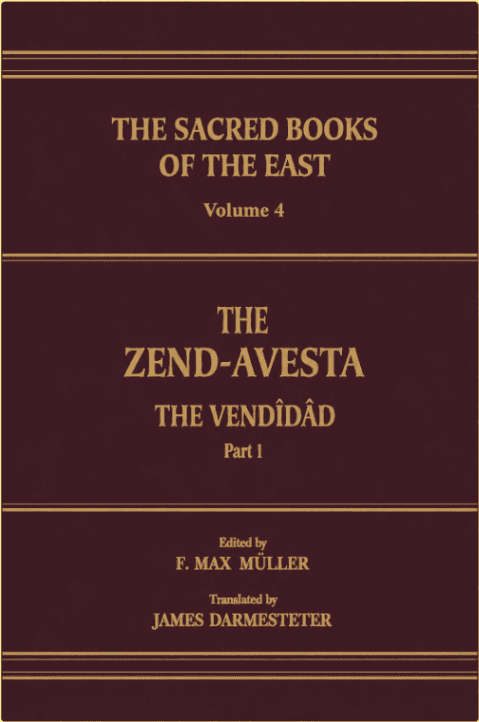
The Zend-Avesta, Part I: The Vendîdâd
F. Max Müller (Editor)
English
Book
Clarendon Press, Oxford
1880
381 pages
18.1 MB
Introduction
The Introduction provides the scholarly framework for understanding the Zend-Avesta. Darmesteter begins with the historical discovery of the Avesta in Europe, especially the efforts of Anquetil-Duperron, the subsequent debates over authenticity, and the gradual establishment of Avestan studies through comparative philology. He then explains the interpretive tension between reliance on Pahlavi tradition and comparison with Vedic Sanskrit, arguing that both methods are necessary: tradition preserves inherited religious understanding, while comparison clarifies older Indo-Iranian structures.
A major part of the introduction examines the formation of the Zend-Avesta. Darmesteter discusses the traditional account that the Avesta once consisted of twenty-one Nasks, much of which was lost after Alexander, and that the surviving collection was later restored and fixed under Sassanian authority. He also analyzes the role of the Magi, the Median background of Zoroastrian priesthood, and the likelihood that the Avesta preserves priestly religious materials older than the final Sassanian redaction.
The section on the origin of the Avesta religion presents Mazdeism as a development from Indo-Iranian religion. Darmesteter emphasizes the dualistic structure of Zoroastrian thought: Ahura Mazda as the good, wise, creative principle, and Angra Mainyu as the destructive principle. The discussion highlights cosmic conflict, the Amesha Spentas, demons, purity, sacrifice, sacred fire, Haoma, and eschatological hope.
The translation of the Vendîdâd forms the core of the volume. The text opens with mythological materials on the lands created by Ahura Mazda and the counter-creations of Angra Mainyu, followed by the myth of Yima. The central body is largely concerned with purity law: the defilement caused by corpses, the treatment of dead matter, purification of persons, houses, roads, water, fire, clothes, vessels, and ritual implements. The text gives special importance to the Dakhma, funerary exposure, the Nasu or corpse-demon, and the Barashnum purification rite.
Later portions of the Vendîdâd deal with the religious and legal status of the dog, including offences against dogs and the atonement for killing a water dog. Other sections address sexual impurity, menstruation, hair and nails, the unworthy priest, heresy, unlawful desire, Zarathustra’s confrontation with Angra Mainyu, the origin of medicine, healing invocations, waters, light, disease, and the power of the holy word. Taken as a whole, the Vendîdâd presents Zoroastrian religion as a disciplined order of cosmic purity, ritual vigilance, ethical responsibility, and resistance against demonic pollution.
Copyright Notice
This material is provided solely for academic research, study, and religious practice purposes under Article 25 of Vietnam's Intellectual Property Law. Reproduction, distribution, or commercial use is strictly prohibited.
If you are the author, translator, publisher, or rights holder and believe this content has been posted without proper authorization, please contact us and we will promptly review and remove or restrict access.
Documents
The Zend-Avesta, Part I: The Vendîdâd
18.1 MB
Series: Sacred Books of the East
Select a volume to see details or navigate between parts.
T.1
Vol. 1
The Upanishads, Part I447 pagesDetails
T.2
T.3
T.4
Vol. 4
The Zend-Avesta, Part I: The Vendîdâd
381 pages
T.6
392 pagesDetails
T.7
Vol. 7
The Institutes of Vishnu393 pagesDetails
T.8
T.9
416 pagesDetails
T.10
431 pagesDetails
T.11
Vol. 11
Buddhist Suttas395 pagesDetails
T.12
T.13
445 pagesDetails
T.14
T.15
Vol. 15
The Upanishads, Part II448 pagesDetails
T.16
T.17
Vol. 17
Vinaya Texts, Part II494 pagesDetails
T.18
T.19
460 pagesDetails
T.20
497 pagesDetails
T.21
541 pagesDetails
T.22
421 pagesDetails
T.23
438 pagesDetails
T.24
Vol. 24
Pahlavi Texts, Part III453 pagesDetails
T.25
T.26
T.27
T.28
T.29
T.30
T.31
Vol. 31
The Zend-Avesta, Part III489 pagesDetails
T.32
T.33
432 pagesDetails
T.34
T.35
428 pagesDetails
T.36
427 pagesDetails
T.37
Vol. 37
Pahlavi Texts, Part IV564 pagesDetails
T.38
T.39
423 pagesDetails
T.40
357 pagesDetails
T.41
T.42
T.43
T.44
T.45
Vol. 45
Gaina Sûtras, Part II509 pagesDetails
T.46
Vol. 46
Vedic Hymns, Part II525 pagesDetails
T.47
Vol. 47
Pahlavi Texts, Part V328 pagesDetails
T.48
T.49
Vol. 49
Buddhist Mahāyāna Text699 pagesDetails
50/50 volumes published
Keywords
The Introduction provides the scholarly framework for understanding the Zend-Avesta. Darmesteter begins with the historical discovery of the Avesta in Europeespecially the efforts of Anquetil-Duperronthe subsequent debates over authenticityand the gradual establishment of Avestan studies through comparative philology. He then explains the interpretive tension between reliance on Pahlavi tradition and comparison with Vedic Sanskritarguing that both methods are necessary: tradition preserves inherited religious understandingwhile comparison clarifies older Indo-Iranian structures. A major part of the introduction examines the formation of the Zend-Avesta. Darmesteter discusses the traditional account that the Avesta once consisted of twenty-one Nasksmuch of which was lost after Alexanderand that the surviving collection was later restored and fixed under Sassanian authority. He also analyzes the role of the Magithe Median background of Zoroastrian priesthoodand the likelihood that the Avesta preserves priestly religious materials older than the final Sassanian redaction. The section on the origin of the Avesta religion presents Mazdeism as a development from Indo-Iranian religion. Darmesteter emphasizes the dualistic structure of Zoroastrian thought: Ahura Mazda as the goodwisecreative principleand Angra Mainyu as the destructive principle. The discussion highlights cosmic conflictthe Amesha Spentasdemonspuritysacrificesacred fireHaomaand eschatological hope. The translation of the Vendîdâd forms the core of the volume. The text opens with mythological materials on the lands created by Ahura Mazda and the counter-creations of Angra Mainyufollowed by the myth of Yima. The central body is largely concerned with purity law: the defilement caused by corpsesthe treatment of dead matterpurification of personshousesroadswaterfireclothesvesselsand ritual implements. The text gives special importance to the Dakhmafunerary exposurethe Nasu or corpse-demonand the Barashnum purification rite. Later portions of the Vendîdâd deal with the religious and legal status of the dogincluding offences against dogs and the atonement for killing a water dog. Other sections address sexual impuritymenstruationhair and nailsthe unworthy priestheresyunlawful desireZarathustra’s confrontation with Angra Mainyuthe origin of medicinehealing invocationswaterslightdiseaseand the power of the holy word. Taken as a wholethe Vendîdâd presents Zoroastrian religion as a disciplined order of cosmic purityritual vigilanceethical responsibilityand resistance against demonic pollution.
Sách đọc nhiều nhất

The Buddha’s Ancient Path
Piyadassi Thera
Book·10.7 MB
229 pages1979223

A Taste of Freedom
Venerable Ajahn Chah / Phra Bodhinyana Thera
Book·1.2 MB
104 pages1980207
Buddhist Meditation: An Anthology of Texts from the Pāli Canon
Sarah Shaw (General Editors: Charles S. Prebish and Damien Keown)
Book·17.5 MB
253 pages2006204
The Book of the Gradual Sayings (Aṅguttara-Nikāya) or More-Numbered Suttas, Vol. I (Ones, Twos, Threes)
F. L. Woodward, M.A.
Book·14.8 MB
309 pages2000201