Introduction
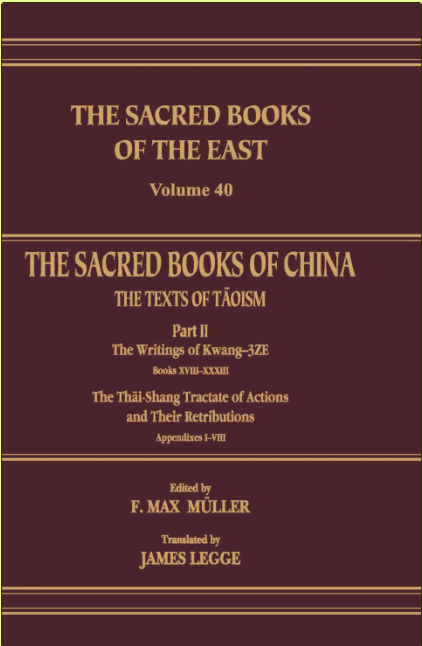
The Writings of Kwang-3ze, Part II — Book XVIII: Kih Lo, or Perfect Enjoyment: Discusses true enjoyment as freedom from attachment, fear, sensual pursuit, and conventional ideas of happiness.
Book XIX: Ta Shăng, or The Full Understanding of Life: Explores preservation of life, destiny, skill, natural action, and the ability to move harmoniously with circumstances.
Book XX: Shan Mu, or The Tree on the Mountain: Uses the image of the useless tree to examine usefulness, uselessness, safety, danger, and freedom from worldly entanglement.
Book XXI: Thien 3ze-fang: Presents dialogues on the true person, inward transformation, the limitations of external learning, and the silent power of the Tâo.
Book XXII: Kih Pei Yû, or Knowledge Rambling in the North: Examines the limits of knowledge, the difficulty of speaking about the Tâo, and the superiority of non-knowing.
The Writings of Kwang-3ze, Part III — Book XXIII: Kang-sang Khû: Discusses hidden virtue, simplicity, non-display, and the danger of honour and public recognition.
Book XXIV: Hsü Wû-kwei: Presents conversations on rulership, ambition, war, self-cultivation, and the inadequacy of artificial methods.
Book XXV: 3eh-yang: Treats human conduct, destiny, official service, naturalness, and the relation between personal integrity and social life.
Book XXVI: Wai Wû, or What Comes from Without: Discusses external influences, inner stability, and the need to avoid being governed by things.
Book XXVII: Yü Yen, or Metaphorical Language: Explains indirect, metaphorical, and adaptive modes of teaching in Taoist discourse.
Book XXVIII: Zang Wang, or Kings Who Have Wished to Resign the Throne: Presents narratives of rulers who reject power, emphasizing detachment from political authority.
Book XXIX: Tao Kih, or The Robber Kih: Critiques conventional morality through the figure of a robber and challenges social hypocrisy.
Book XXX: Yüeh Kien, or Delight in the Sword-fight: Discusses martial skill, danger, and the moral limits of violent display.
Book XXXI: Yü-fu, or The Old Fisherman: Presents the old fisherman as a figure of Taoist insight who criticizes Confucian artificiality.
Book XXXII: Lieh Yü-khau: Contains stories on self-display, reputation, humility, skill, death, and freedom from social ambition.
Book XXXIII: Thien Hsiâ, or Historical Phases of Taoist Teaching: Surveys different schools and thinkers, including Taoist, Mohist, and dialectical traditions.
The Thâi-Shang Tractate of Actions and Their Retributions: Presents a moral doctrine of recompense, teaching that good and evil actions bring corresponding consequences through cosmic and spiritual oversight.