Introduction
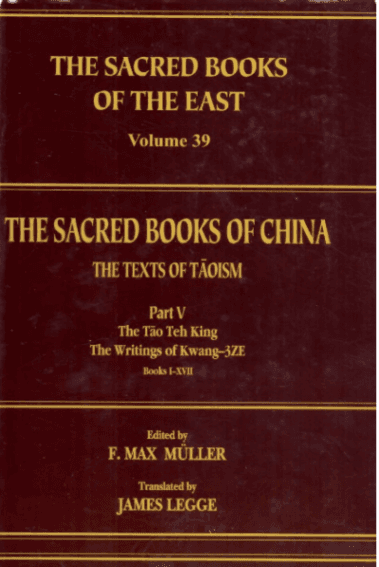
Preface: Explains the purpose of translating the main Tâoist texts, especially Lao-3ze, Kwang-3ze, and later Tâoist ethical materials.
Introduction, Chapter I — Was Tâoism Older than Lao-3ze?: Discusses the antiquity of Tâoism, its relation to Confucianism and Buddhism, and the question of whether Tâoist principles preceded Lao-3ze.
Introduction, Chapter II — The Texts of the Tâo Teh King and Kwang-3ze Shu: Examines authenticity, genuineness, textual transmission, catalogues, commentaries, divisions, and the arrangement of Lao-3ze and Kwang-3ze’s writings.
Introduction, Chapter III — Meaning of the Name Tâo and Chief Points of Belief in Tâoism: Explains the term Tâo, Heaven, creation, body and spirit, longevity, non-action, humility, and the moral teachings of Lao-3ze.
Introduction, Chapter IV — Accounts of Lao-3ze and Kwang-3ze Given by Sze-ma Khien: Presents historical notices of Lao-3ze and Kwang-3ze from Sze-ma Khien.
Introduction, Chapter V — On the Tractate of Actions and Their Retributions: Introduces later ethical Tâoism, retribution, Buddhism’s influence, and the institutional development of Tâoist religion.
The Tâo Teh King, Part I — Chapters 1–37: Presents teachings on the nameless Tâo, non-action, simplicity, humility, softness, restraint, government, and natural order.
The Tâo Teh King, Part II — Chapters 38–81: Develops themes of virtue, return to simplicity, political restraint, non-contention, moral paradox, and the sage’s way.
The Writings of Kwang-3ze — Introduction: Gives brief notices of the different books and explains their philosophical scope.
Book I — Hsiao-yâo Yû, or Enjoyment in Untroubled Ease: Discusses spiritual freedom, transcendence, and the ideal Tâoist person.
Book II — Khî Wû Lun, or The Adjustment of Controversies: Treats relativity of judgment, language, dispute, and the equalizing vision of the Tâo.
Book III — Yang Shăng Kû, or Nourishing the Lord of Life: Explores preservation of life through naturalness and skillful non-forcing.
Book IV — Zan Kien Shih, or Man in the World, Associated with Other Men: Discusses conduct amid human society and political danger.
Book V — Teh Khung Fû, or The Seal of Virtue Complete: Presents virtue beyond outward form, deformity, and social convention.
Book VI — Tâ Zung Shih, or The Great and Most Honoured Master: Explores the true master, life and death, transformation, and spiritual realization.
Book VII — Ying Tî Wang, or The Normal Course for Rulers and Kings: Discusses rulership according to non-action and natural order.
Book VIII — Phien Mû, or Webbed Toes: Critiques artificial morality and forced distinctions.
Book IX — Mâ Thî, or Horses’ Hoofs: Uses horses as an image to criticize imposed control over natural life.
Book X — Khü Khieh, or Cutting Open Satchels: Critiques social disorder, robbery, and the misuse of knowledge and institutions.
Book XI — Zâi Yû, or Letting Be, and Exercising Forbearance: Presents non-interference, natural governance, and restraint.
Book XII — Thien Tî, or Heaven and Earth: Discusses Heaven, Earth, rulers, sages, and cosmic order.
Book XIII — Thien Tâo, or The Way of Heaven: Explores the heavenly Tâo, spontaneity, and the proper relation between action and stillness.
Book XIV — Thien Yün, or The Revolution of Heaven: Discusses cosmic movement, transformation, and the limitation of artificial teaching.
Book XV — Kho Î, or Ingrained Ideas: Critiques fixed ideas and conventional attachments.
Book XVI — Shan Hsing, or Correcting the Nature: Treats the preservation and correction of human nature according to the Tâo.
Book XVII — Khiû Shui, or The Floods of Autumn: Presents reflections on perspective, limitation, vastness, and the relativity of knowledge.